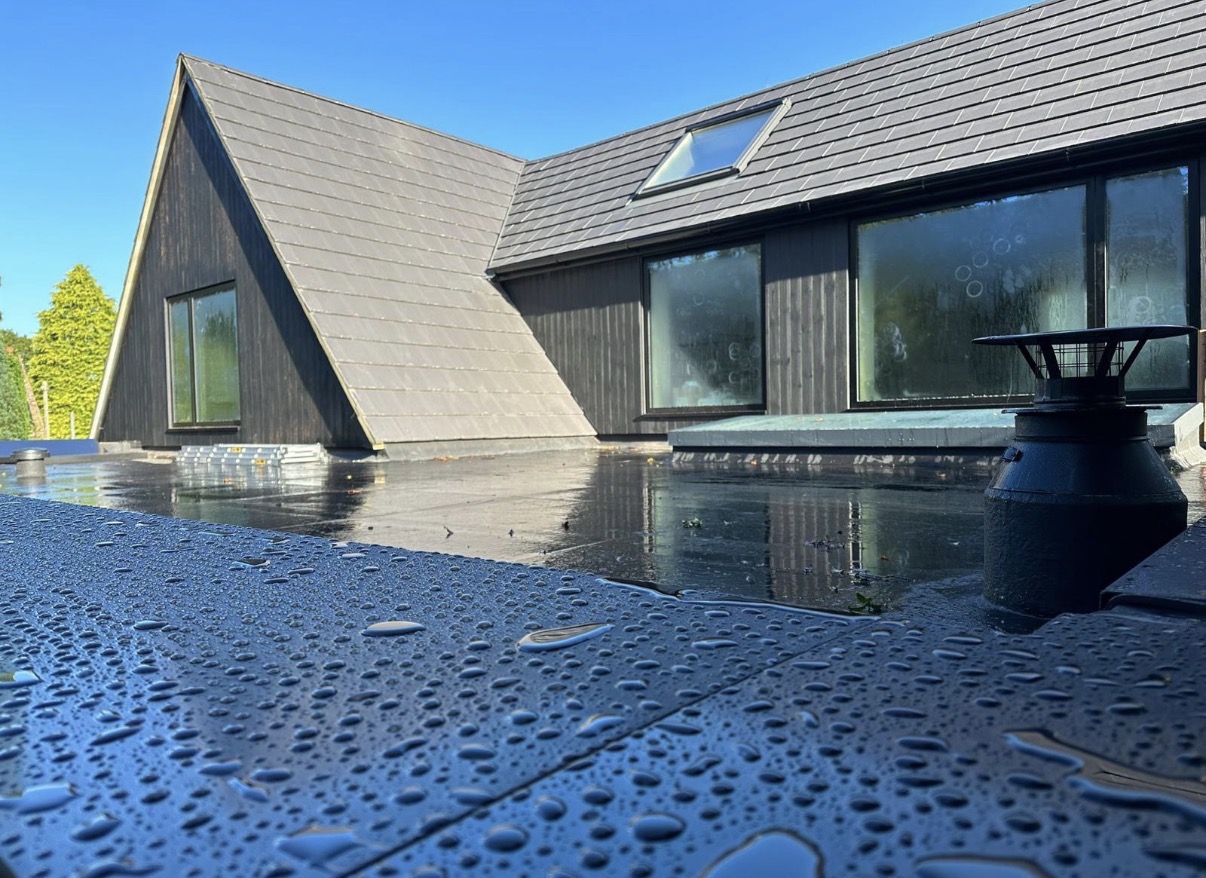
A flat roof should be assessed as a complete build-up, from the deck and insulation to the waterproofing and rainwater outlets. EPDM, GRP and reinforced-bitumen systems offer different approaches. The appropriate choice depends on the roof's condition, shape, use and specification, with particular attention to edges, upstands and penetrations.
The existing surface is only part of the assessment. The roof's condition, supporting deck, junctions and drainage need consideration before a repair, overlay or replacement is proposed. An overlay is not a universal answer, and any retained layers must be suitable for the chosen system and the condition of the roof.
02
Specify the full build-up
The waterproofing layer works with the rest of the roof. Insulation, vapour control and supporting layers should be coordinated within a project-specific specification. A useful quotation identifies the proposed system and its components, rather than describing the work simply as a new rubber, fibreglass or felt roof without further detail.
03
Give drainage and junctions attention
Outlets, roof edges, wall abutments and penetrations need compatible details within the selected system. Their condition and arrangement should be considered alongside the main roof surface. Where a proposal changes the existing drainage or connections, those alterations should be included clearly in the scope and explained before the work begins.
04
Set out use and aftercare
The roof's intended use matters when choosing the specification. Occasional maintenance access and a roof terrace are different requirements. The handover should explain suitable access, routine checks and any maintenance obligations, together with the actual terms of any applicable product or workmanship cover for the particular installation and build-up.
EXPLORE THE POSSIBILITIES
Compare your options.
Suitability depends on the property, the selected product system and the agreed design.
EPDM rubber membranes
EPDM is a flexible synthetic-rubber membrane. Large sheets can reduce field seams on suitable roof shapes, and specified systems can be installed with cold-applied adhesive. Edges, outlets and penetrations still require careful system-compatible detailing rather than relying on the sheet alone.
GRP fibreglass systems
GRP roofing combines resin and fibreglass reinforcement with a specified finishing layer. Product choice and substrate preparation matter. Conventional deck-applied systems differ from flexible overlay products, so the proposal should identify the actual system and its suitability for the existing roof.
Reinforced-bitumen roofing
Modern felt systems use reinforced-bitumen membranes within a specified waterproofing build-up. Depending on the product and project, installation may be torch-applied, flame-free or hybrid. The exact system matters more than broad assumptions about all felt roofs having the same construction or performance.
PLAN WITH CONFIDENCE
Before you commit to the work.
Warm roof or cold roof: the layers matter
In a warm roof, insulation sits above the structural deck and below the waterproofing. A cold roof places insulation below the deck and relies on a suitably designed ventilated space above it. Changing between these arrangements needs a coordinated design for moisture control, insulation and ventilation. Adding a new surface alone does not establish that the layers beneath it are suitable.
Improve drainage without overlooking the edges
Tapered insulation can help create drainage falls, but the increased roof height may affect door thresholds, wall upstands and perimeter details. Moving or adding an outlet also depends on where the water can discharge. A renewal proposal should show how the finished surface drains and explain any consequences for adjoining windows, walls or rooflights, rather than treating the waterproof covering as an isolated layer.
BEFORE WORK BEGINS
A clear scope. Fewer surprises.
Agree what is included, what remains uncertain and how any additional work will be authorised.
Materials & detailsSelected products, junctions, weather protection and connected works.
Written proposalScope, exclusions, waste removal, programme and payment stages.
Completion & careFinal review, outstanding items and applicable product or workmanship documents.
YOUR QUESTIONS
Know what to ask.
Which flat roof material is best?+
The suitable system depends on the roof's shape, condition, use and complete specification. EPDM, GRP and reinforced-bitumen systems have different installation approaches and detailing requirements. Compare the proposed build-up, product, installation method and applicable terms rather than relying on a simple material ranking.
Can a new system be laid over the existing roof?+
Sometimes, but the existing roof must first be assessed for suitability. The retained substrate and layers need to be compatible with the chosen system and in an appropriate condition. An overlay should be justified for the particular roof, rather than assumed to be suitable because it avoids removal.
Does a long product lifespan mean the same length of guarantee?+
No. A manufacturer's service-life statement and a guarantee are different things. Actual cover can depend on the specified build-up, installer status, installation requirements and maintenance. The quotation and handover should identify the cover that applies to the particular project and explain its scope and conditions.
Why might a flat roof survey include a core sample?+
A carefully planned sample can reveal the existing roof layers and help assess their condition, including insulation and trapped moisture. Whether sampling is appropriate depends on the roof and proposed work. The survey scope should explain the method, permissions and how the opening will be made watertight.
Will a new waterproof covering correct a low spot?+
Not by itself. A low area may relate to the existing falls, the supporting deck or its deflection. The cause needs assessment before deciding whether alterations to the structure, insulation layout, drainage or a combination of these are appropriate.
A CLEAR NEXT STEP
Your roof. Let’s look closer.
Whether you have noticed a problem or are planning a larger change, begin with a few details about the property and the work you have in mind.
A property-specific assessment
Repair and replacement options explained
A written scope before work is agreed
LEAK OR RECENT DAMAGE?
Tell us what is happening and how urgently you need help. An online enquiry does not confirm attendance or an emergency response.
With your permission, Google Analytics measures website visits and saved enquiries, and Google Ads uses cookies and ad click identifiers to measure which adverts lead to roofing enquiries. We send an enquiry ID, not your name, contact details or project text. You can reject this and still use the website and form. Read about measurement.